

The Future of College Sports: Are We Ready for Robot Competitors?

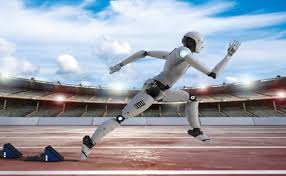
The world of sports has always been a reflection of human excellence. From ancient athletic contests to the modern-day collegiate tournaments, sports celebrate the power, endurance, and strategic thinking of human athletes. But as technology continues to advance at an exponential pace, a fascinating question arises: Could robots one day compete in college sports? More importantly, are we ready for such a transformation in the world of athletics?
The idea of robots as competitors in college sports may sound like science fiction, but the increasing role of artificial intelligence (AI) and robotics in our daily lives suggests that it might not be far off. From self-driving cars to AI assistants, technology is rapidly evolving, and robots are already being developed with the physical and cognitive capabilities to compete in certain types of sports. As these technologies continue to mature, it is not unthinkable that robots could someday participate in college athletics. However, the implications of such a shift go far beyond the mechanics of the competitions themselves. It raises questions about fairness, ethics, and what it truly means to be an athlete.
The Rise of Robotic Technology in Sports
Robots have already made their mark in the world of sports, though primarily behind the scenes. Automated systems are used to enhance performance analysis, gather data on athletes, and even assist in training. For example, robotic tennis ball launchers help players improve their reflexes, while AI-driven software analyzes movement patterns to suggest optimal techniques.
But the idea of robots actively competing in sports moves this conversation to an entirely new level. Robotics companies and researchers are making significant strides in creating machines capable of physical feats that rival human athletes. Boston Dynamics’ robots, for example, can perform gymnastics, run, and execute complex maneuvers with precision. This raises the possibility that robots could not only participate in but excel at certain physical tasks typically dominated by human athletes.
The rise of esports, where competitors use avatars and machines to compete, also points to the growing role of technology in competitive environments. If students are already competing via digital means in games that rely on strategy, reflexes, and precision, adding robots to the mix may not seem like such a large leap.
What Would Robot Competitors Look Like?
If robots were to compete in college sports, they would likely take one of two forms. In some cases, they might be designed to emulate the physical capabilities of human athletes, capable of running, jumping, and throwing. Such robots could be built with artificial muscles, joint systems, and even sensors that mimic human proprioception—the ability to sense one’s position and movement in space.
Alternatively, robot competitors might not resemble human athletes at all. Instead, they could take the form of highly specialized machines, optimized for specific tasks and functions. For example, a robot built to play basketball might not look like a person but could possess the ability to shoot with incredible accuracy and calculate the perfect trajectory for every throw.
Either way, the presence of robot competitors would introduce new variables into sports competitions, forcing humans to adjust to new forms of competition and cooperation. But while the technology might be fascinating, it also brings up a number of challenges that could fundamentally reshape the nature of sports.
Fairness and Ethics in Robotic Sports
Perhaps the biggest question surrounding the inclusion of robots in college sports is one of fairness. Would human athletes be competing on a level playing field against robotic counterparts? Could robots be designed to follow the same rules and limitations as human athletes, or would their abilities far exceed those of their human competitors?
The concept of fairness in sports is rooted in the idea that all athletes face similar physical and environmental challenges. If robots were introduced, those rules would need to be redefined. After all, a robot that doesn’t tire, experience injury, or succumb to nerves would have a significant advantage over even the most skilled human athlete. This imbalance could lead to a shift in the purpose of sports—from a test of human endurance and skill to a contest of technological prowess.
Ethical questions also arise in considering the purpose and spirit of competition. Would fans find the same emotional connection with robots as they do with human athletes? One of the most captivating aspects of sports is the human story: the journey of an athlete overcoming adversity, pushing their limits, and growing through challenges. If robots were to take the field, that narrative might lose its emotional resonance, as machines do not experience pain, joy, or personal growth in the same way humans do.
Preparing for a Hybrid Future
While the full integration of robots into college sports may still be decades away, it’s clear that technology is already changing the landscape of athletics. Wearable devices, AI-driven coaching, and automated training tools are pushing athletes to new heights, and the next step could involve direct competition between humans and machines.
The key question is whether society is ready to accept robots as legitimate competitors in sports. Some may argue that robots could serve as valuable tools for athletes, helping them train, recover, and improve their performance. Others, however, may resist the idea of robots in competition, seeing it as an erosion of the human element that makes sports so compelling in the first place.
Whatever the future holds, one thing is certain: the intersection of sports and technology will continue to evolve. As we approach a world where robots could compete alongside or against humans in athletic contests, we will need to grapple with the ethical, logistical, and emotional challenges this new reality presents. The future of college sports may indeed feature robot competitors, but whether we are ready for it remains to be seen.