

Sports and Leadership: From College Athlete to the C-Suite


Tamir Goodman, Andrew Petcash, and Rose Zhong Punkunus share their takes.
While the skills needed to function as an executive come mostly from higher education and work, the ability to lead people through both good and bad moments is best developed before taking an executive position. But few leaders, before their C-suite role, have ever had to lead a group of people towards a goal at scale, especially outside of the workplace.
Many leadership styles are displayed and adapted within athletics, from youth to professional leagues. Being an athlete, especially a highly skilled one, allows an individual to succeed and fail as a leader of their peers at multiple levels. Through trial and tribulation in athletics, former athletes who are now executives could try on different leadership styles for size, see what worked for them, and carry the effective ones into their careers in business.
Sports and Business Parallels
Tamir Goodman, who gained international notoriety when Sports Illustrated dubbed him the Jewish Jordan in 1999, developed many of the skills needed to be successful in business during his time as a basketball player at Towson University and as a professional in Israel. According to him, business and sports have invaluable learning points from each other.
“I believe the things you need to be successful in collegiate sports are the same things you need to be successful at business,” said Goodman. “Never burning bridges, investing in relationships, managing time, being flexible when you need to be flexible, being non-flexible too, and continuing to believe in what you’re doing.”
Great leaders create leaders. You need to let your colleagues know you believe in them, always uplifting them and empowering them to reach their full potential. — Tamir Goodman, co-founder of Aviv Net
According to Goodman, the little things in sports that make a great all-around player are the main components that carry over into business.
“Understanding your role, looking at the big picture, never being too high after a high or too low after a loss, being very balanced in your mind and taking care of your body, understanding your values and identity, these are all things I learned in college basketball that also helped me in business,” he said.

Now, the co-founder of Aviv Net, a company that designed a basketball net that sanitizes the ball after each shot, Goodman has become fully committed to being successful at business without fully stepping away from the game. The leadership skills acquired during his time playing are what pay dividends two decades later.
“Leadership is setting a great example and being a great role model,” said Goodman. “Great leaders create leaders. You must let your colleagues know you believe in them, always uplifting and empowering them to reach their full potential.”
Sound Communication and Authenticity
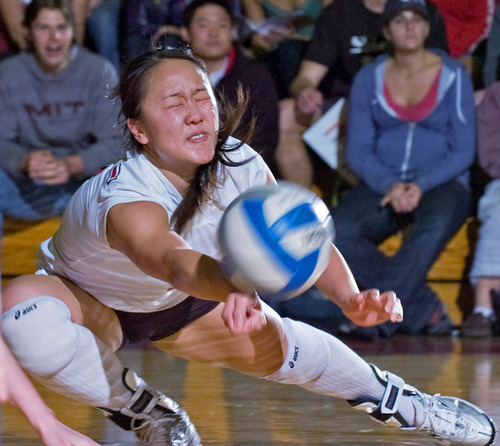
With all the emotions and personalities inside a locker room, the importance of communication as a leader is pivotal to success. According to Rose Zhong Punkunus, the former Uber Now CFO turned CEO of procurement platform Sudozi, her experience as a volleyball player at MIT brought her not just NCAA tournament runs and school records but the opportunity to develop people skills that she has used throughout her career.
Zhong credits her emotional stamina to her experience playing sports. She also understands that the tones and words she uses to communicate with her teams make a big difference in how that communication is received.
“I think it’s critically important for finance leaders not to freak out when a business partner does something that is a poor financial outcome,” she said. “Oftentimes people get concerned ‘the CFO is going to yell at me’ if the truth is revealed, so they go to all sorts of lengths to hide the truth from the CFO.”
“The best way to encourage open dialogue and transparency is to incentivize it positively,” said Zhong. “Silly small things like saying ‘thank you for telling me’ when someone tells you their team was over budget can encourage them to be transparent and do better next time.”
Like sports, Zhong said business comes down to the humans involved.
“Open communication and making time for one-on-ones with team members are good routines to help build empathy and common goals that are a win-win for the organization and the individuals on the team.”
No matter what collegiate sports team you’re on, you have to recruit players to join your program versus others. Experience with those conversations translates well to recruiting for your business. — Rose Zhong Punkunus, CEO of Sudozi
“One surprising area that has helped me in business recruiting is my experience recruiting players to join the Division III MIT Team,” Zhong added.
“No matter what collegiate sports team you’re on, you have to recruit players to join your program versus others. Experience with those conversations translates well to recruiting for your business.”
This article was written by Adam Zaki and originally published by CFO.