

Rani Rampal: The Legend Who Transformed Indian Women’s Hockey

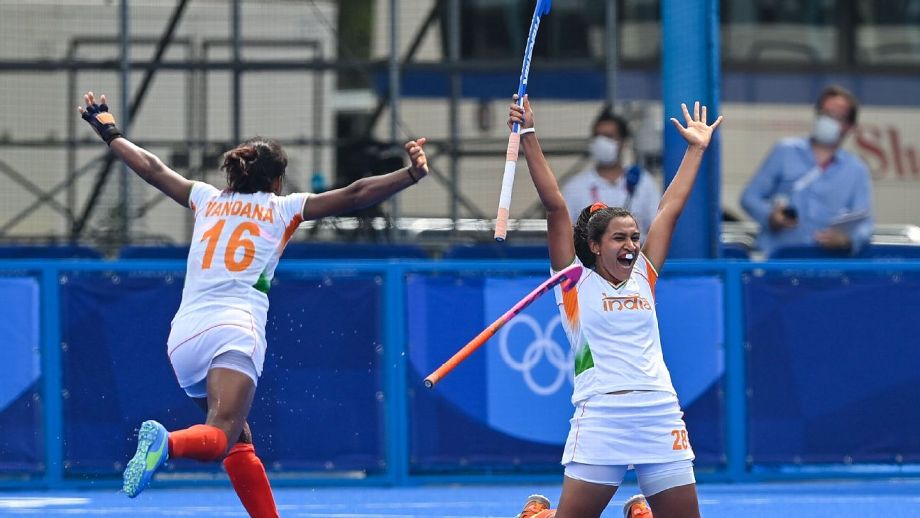
Rani Rampal, one of India’s most iconic athletes, has left an indelible mark on women’s hockey, elevating the sport and inspiring future generations. Her journey began at the age of 14 in 2009, and over the years, she helped propel India to the forefront of international hockey. Rani’s career crescendoed with a historic fourth-place finish at the Tokyo Olympics, where she led the team as captain.
With 205 goals in 254 international matches, her numbers speak to her skill and tenacity. Yet, her value extends far beyond the stats; her absence from the national team for the past three years has been felt keenly, leaving a void the team still grapples with.
The Early Journey of a Hockey Icon
Understanding Rani’s impact requires knowing her roots. Raised in a small town in Haryana, Rani grew up in humble circumstances where daily meals were a challenge. Her father was a cart puller, and her mother worked as a domestic help. Despite the hardships, Rani discovered a passion for hockey and committed herself to pursuing it, despite initial resistance from her family and her coach, Baldev Singh, who once doubted her physical ability to endure the demands of the game.
The early challenges only fueled Rani’s drive. Once she joined the local academy, her talent quickly stood out. She rapidly progressed from sub-junior to international levels, making her debut for the national team at age 14.
A Phenomenal International Debut
In 2009, Rani first donned the national jersey, and within a year, she made a significant impact on the global stage. At just 15, she scored seven goals in six matches at the 2010 World Cup in Argentina, earning the tournament’s Best Young Player award. At the time, India’s women’s hockey team struggled to gain a foothold internationally. The team often faced an uphill battle even to qualify for world events, but Rani’s emergence as a goal scorer provided a much-needed boost, helping put Indian women’s hockey on the map.
In 2014-15, her goals at the Women’s FIH Hockey World League Semifinals, an Olympic qualifier tournament, played a crucial role in ending a 36-year Olympic absence for the Indian women’s team. Her goals against Italy and Japan secured India’s spot in the Rio 2016 Olympics, marking a new era for Indian women’s hockey.
Achieving New Heights
After 2016, the Indian women’s hockey team aimed for continental titles. Rani was instrumental in this journey, helping India win their first Asian Champions Trophy in 2016 and captaining the team to an Asia Cup victory in 2017. She scored three times in the Asia Cup, including two shootout goals in the final against China, and later led the team to a silver at the 2018 Asian Games.
During this period, Rani’s game evolved significantly. She became more than just a goal scorer; she matured into a playmaker, dropping back to create scoring opportunities for teammates. Her relentless work ethic on the field set a new standard for Indian women’s hockey, and her ability to adapt to the increasingly physical demands of modern hockey was inspirational. Her coach, Baldev Singh, praised her “killer instinct,” a trait she carried with her until the end of her playing days.
Rani’s contributions were pivotal again in the qualification for the Tokyo Olympics. With India trailing the U.S. in the decisive qualifier, Rani scored the game-winning goal that booked India’s ticket to Tokyo. This performance highlighted her enduring ability to deliver under pressure, a hallmark of her career.
Making History at the Tokyo Olympics
Already a legend, Rani’s defining moment came at the Tokyo Olympics, where she captained the team to an impressive fourth-place finish, their best-ever Olympic result. While her role extended beyond scoring, her leadership and influence were crucial to the team’s success. She inspired a generation of young players, including Lalremsiami, Salima Tete, Navneet Kaur, and Sharmila Devi, who looked up to Rani as their role model. Her influence was felt not just on the field but in the locker room, where she motivated her teammates to play with courage and dedication.
The Tokyo 2020 squad, led by coach Sjoerd Marijne, embodied the fighting spirit that Rani displayed throughout her career. They combined talent, grit, and sheer hard work to deliver a memorable Olympic campaign.
The End of an Era
Following the Tokyo Olympics, Rani’s career took an unexpected turn. Years of intense play had taken a toll on her body, leading to injuries that limited her appearances on the field. Despite her efforts to return, she only played one match between the Olympics and the end of 2022. She missed the World Cup and the Commonwealth Games, and despite a comeback attempt in early 2023, Rani’s playing days were effectively over.
Reflecting on her career, Rani expressed disappointment over not being selected after her recovery. She continued to excel, finishing as the top scorer in the National Games, but was unable to regain her place on the national team. In 2023, she transitioned to a new role as head coach of the Indian national sub-junior women’s team, where she aims to guide the next generation.
A Legacy Beyond the Field
Rani’s absence has been deeply felt by the national team, as India struggles to replicate her goal-scoring prowess. Her contributions went beyond mere statistics; she reshaped Indian women’s hockey and inspired countless young players across the country. Though her career did not end with a fairytale finish, Rani’s legacy endures as a beacon of resilience and excellence.
Her era officially ended on Thursday, but her impact on Indian hockey is far from over. As she steps into her new role in coaching, Rani continues to inspire, setting an example for future players who will follow in her footsteps. Her story is not just of an exceptional player but of a transformative force in Indian sports, whose dedication and achievements will be remembered for years to come.