

NCAA President Takes a Shot at College Sports Prop Bets

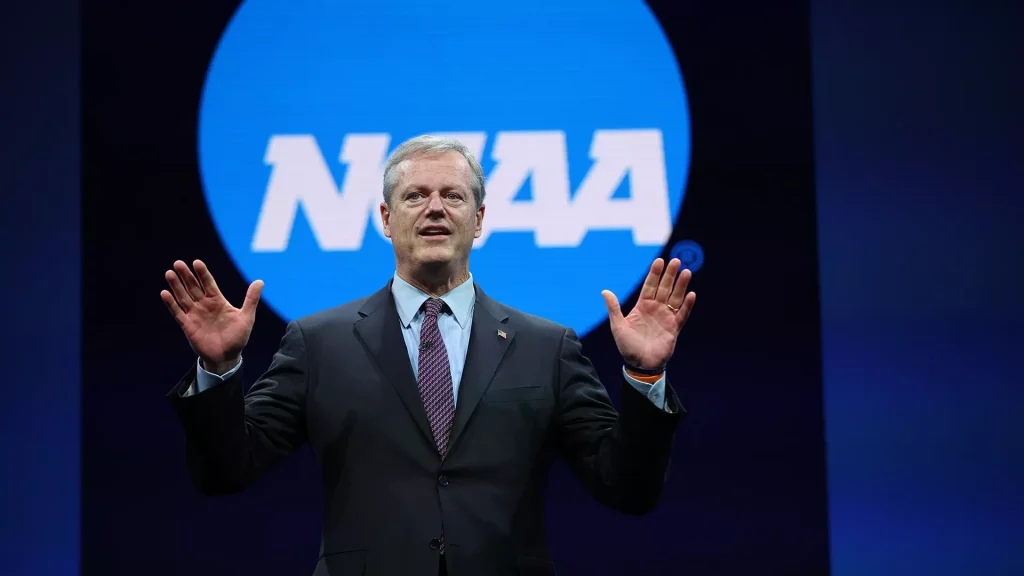
In a surprising twist on Capitol Hill this week, NCAA President Charlie Baker took center stage with a message that might make sports bettors sweat: It’s time to bench prop bets in college sports. And no, this isn’t just about saving your bracket from heartbreak; it’s about saving student-athletes from some truly bizarre harassment.
Ever since the Supreme Court unlocked the legal sports gambling floodgates in 2018, bettors have been diving into the action with gusto. But along with the $120 billion wagered last year came a tidal wave of abuse aimed at student-athletes. Baker, speaking to the Senate Judiciary Committee, didn’t pull any punches: “When bettors can’t gamble on individual performances, they’re far less likely to harass or coerce athletes,” he explained.
Prop bets—those juicy wagers on whether a player nails a three-pointer or how many rebounds they snag—are currently legal in about 20 states. But according to Baker, they’re also a gateway to some pretty unsportsmanlike behavior. A staggering 10-15% of Division I athletes have reported being harassed by disgruntled bettors. Football and basketball players, often in the spotlight, face the brunt of it.
Take the case of Armando Bacot, the University of North Carolina basketball star. After a game where his rebound count didn’t quite satisfy gamblers, Bacot found himself on the receiving end of dozens of angry messages. And it’s not just online vitriol; Baker shared tales of classmates sidling up to athletes with requests like, “Hey, buddy, no hard feelings—just miss your first two free throws for me, will ya?”
As Baker pointed out, it’s not just about protecting athletes from online trolls but also shielding them from in-person confrontations and even death threats. His solution? Ban prop bets on college sports entirely and introduce federal measures to blacklist known harassers from placing future bets.
The “S.A.F.E. Bet Act”: Betting Smarter, Not Harder
At the heart of Tuesday’s hearing was the proposed “S.A.F.E. Bet Act,” co-authored by Senator Richard Blumenthal. This bill isn’t just targeting prop bets; it’s going all in on reforming sports gambling. Highlights include banning those seductive “bonus bets,” limiting gambling ads during games, nixing credit card deposits for gambling accounts, and requiring high-rollers to prove they’re not betting beyond their means.
Will this bill become law? Let’s just say it’s got a steeper climb than a Division III player trying to make it to the NBA. But Blumenthal and his House co-sponsor, Representative Paul Tonko, aren’t backing down. Both plan to keep pushing next year when Congress reconvenes.
A Plot Twist: Transgender Athlete Debate Makes a Cameo
Of course, no trip to Capitol Hill is complete without a little political curveball. Two Republican senators shifted the spotlight to the NCAA’s policies on transgender athletes, grilling Baker on what they see as a pressing issue in women’s sports.
While Baker emphasized that fewer than 10 transgender athletes currently compete in NCAA sports, the senators were less than reassured. The issue has flared up in recent months, with high-profile lawsuits and forfeit controversies making headlines. Baker diplomatically expressed a desire for “clarity” on the matter, though achieving that might require more than just a friendly chat with Congress.
The Final Whistle
For now, the NCAA’s call to action on prop bets is loud and clear. While the odds of immediate federal action might not be great, Baker’s testimony has undeniably added momentum to the conversation around protecting student-athletes. And who knows? If Congress ever needs tips on teamwork, they might just take a page out of the NCAA’s playbook.