

From Face-Off to Fired Up: Quinnipiac and Cornell Battle Their Demons at MSG

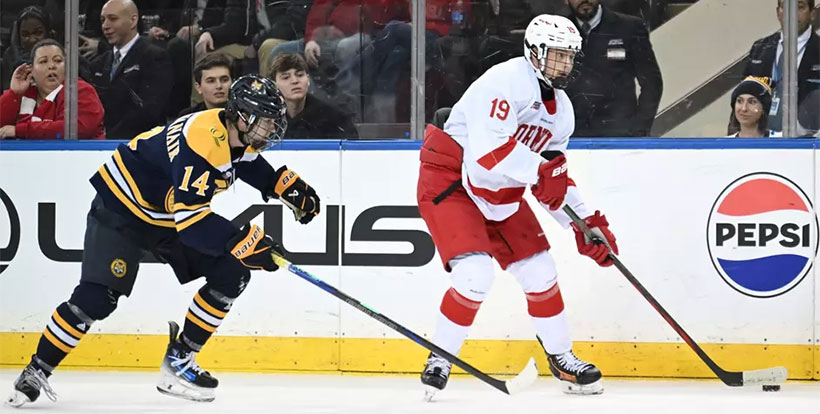
It was supposed to be a marquee showdown, but Quinnipiac and Cornell’s Madison Square Garden clash turned into something more raw, something grittier—a good, old-fashioned scrap to shake off early-season woes. If the ECAC powerhouses have defined dominance over the past decade, this year’s bumps have been more “oops” than “ops.”
Quinnipiac, with 14 fresh faces on the roster, has been fielding rookies like they’re kids learning to ride bikes—except the “training wheels” are hard lessons on a scoreboard. Cornell, meanwhile, began the season with high hopes and a healthy lineup—until the injury bug showed up like an uninvited guest, chewing through 32 man-games in just eight outings.
And so, when the Bobcats and Big Red faced off under the bright lights of MSG in front of 16,593 fans, the game became something else entirely: a test of who could patch up the cracks faster. Both teams flashed brilliance, bungled basics, and—surprise—landed in a 3-3 stalemate.
Growing Pains and Glaring Mistakes
Midway through the third period, Quinnipiac’s Braden Blace found himself in every defender’s nightmare: stickless and stranded. The Bobcats fumbled three clearing attempts while Blace—practically on an island—did his best impression of “help, I’m open!” Cornell turned one opportunity into three while Quinnipiac scrambled.
“Maturity thing,” Quinnipiac head coach Rand Pecknold said after the game. Translation: “We’re young, and it shows.”
For years, Quinnipiac’s play has been defined by tight, tactical hockey—dominance in puck possession and defensive control. But the numbers don’t lie: This season’s Corsi For percentage (CF%), a stat that tracks puck control, has dipped to a humbling 51.5%, their lowest in a decade.
The Bobcats’ second goal, which would have been comedic gold if not for its cringe factor, summed up the problem perfectly: a bouncing puck, a mistimed clear, and two players colliding like toddlers chasing the same toy. Cornell snatched the giveaway, capitalized on a 2-on-0 break, and made it look easy.
Resilience Lives Here
But here’s the thing about great teams: they bend but don’t break. Cornell’s head coach, Mike Schafer, summed it up best:
“Good first, bad second, good third—kind of the story of the night.”
Both teams showcased resilience, bouncing back after rough periods that might’ve unraveled lesser squads. Quinnipiac, trailing after the first, roared to life in the second with a level of firepower that had Pecknold grinning through the frustration:
“There were a ton of positives tonight.”
Cornell, a team that’s made playing from behind a habit (and an art form), regrouped after a disastrous second period. By the time the third rolled around, they had reloaded the cannon and responded.
“You get challenged after the second period,” Schafer said, “and you come back in the third? That just doesn’t happen often in sports.”
It’s easy to think resilience is all heart and guts—digging deep, pushing through—but it’s also about listening to harsh truths. Schafer didn’t mince words in the locker room, and he admitted as much postgame:
“It’s never pretty. I’m too old for it. But it had to be done.”
For both teams, the night was a masterclass in dusting off mistakes and stepping back into the ring.
Pressure Makes Diamonds
When you boil it down, Quinnipiac and Cornell are two programs forged in the fire of pressure. These aren’t teams that collapse under the weight of expectations—they adapt, grow, and rise to meet the challenge. Saturday’s draw may not have delivered a “winner,” but the game provided something more valuable: proof that both teams are learning, rebuilding, and fighting through the messy middle of their seasons.
Sure, mistakes were made. But they’ll sit in the film room, rewatch those fumbled clears, and commit to doing better—because that’s what championship-caliber teams do.
And let’s not forget the setting: The World’s Most Famous Arena. The biggest crowd in college hockey this year. For a group of players still finding their footing, that’s no small feat. Under the spotlight, they didn’t fold—they fired up.
As the holiday break looms, Quinnipiac and Cornell know there’s work to be done. But the pieces are there. The best teams don’t just shine when everything’s perfect—they find ways to improve when everything isn’t.
So if you’re tempted to write off two teams in transition, don’t. The Bobcats and Big Red might just be the most dangerous versions of themselves come March—battle-tested, resilient, and ready for their next big stage.