

Charlie Baker: From Public Office to the Presidency of the NCAA

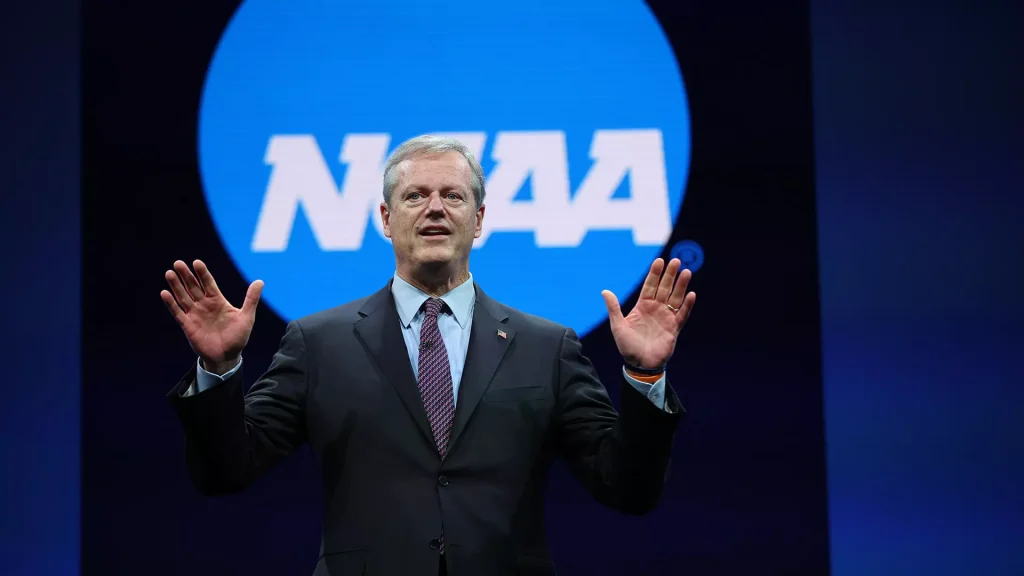
Charlie Baker, the former governor of Massachusetts and now president of the NCAA, represents a unique intersection of public service, leadership, and a dedication to the transformative power of sports. Known for his pragmatic governance style and ability to navigate complex systems, Baker’s transition to the NCAA has brought a fresh perspective to one of the most influential organizations in collegiate athletics.
A Legacy of Pragmatism and Collaboration
Before stepping into the role of NCAA president, Baker built a reputation as a bipartisan leader during his tenure as governor of Massachusetts. Serving from 2015 to 2023, he consistently ranked among the most popular governors in the United States. His approach was marked by a focus on consensus-building, a commitment to fiscal responsibility, and a knack for addressing systemic issues with innovative solutions.
Baker’s time in public office saw him tackle a wide range of challenges, from improving the state’s healthcare system to modernizing its transportation infrastructure. His ability to work across party lines and prioritize results over partisanship earned him widespread respect, both within Massachusetts and nationally. These skills have proven invaluable as he takes the reins at the NCAA, an organization often at the center of contentious debates about the future of college athletics.
Transitioning to the NCAA Presidency
Charlie Baker assumed the presidency of the NCAA in March 2023, a pivotal moment for collegiate sports. The organization, which oversees the athletic programs of more than 1,000 colleges and universities, has faced increasing scrutiny in recent years. From debates over student-athlete compensation to concerns about governance and equity, the NCAA stands at a crossroads.
Baker’s appointment signaled a departure from tradition. Unlike his predecessors, who often hailed from the world of college athletics or higher education administration, Baker brought a fresh perspective as a seasoned public servant. This background positioned him uniquely to navigate the political, legal, and societal pressures that shape the future of collegiate sports.
Addressing the NIL Landscape
One of the most pressing issues Baker inherited as NCAA president is the rise of Name, Image, and Likeness (NIL) agreements, which allow student-athletes to profit from endorsements and sponsorships. While widely celebrated as a step toward equity, the rapid growth of NIL opportunities has introduced challenges, including disparities among athletes, concerns about compliance, and potential impacts on amateurism.
Baker’s leadership has focused on creating a more structured and sustainable NIL framework. Leveraging his experience in public policy, he has worked to build partnerships with lawmakers, university leaders, and athletic directors to establish guidelines that ensure fairness while preserving the essence of collegiate competition. His emphasis on collaboration and transparency reflects the qualities that defined his tenure as governor.
Expanding the Role of College Sports
Beyond NIL, Baker has championed the broader societal value of college sports. He views athletics not merely as a competitive pursuit but as a powerful vehicle for education, character development, and community building. Under his leadership, the NCAA has placed renewed emphasis on student-athlete well-being, addressing issues such as mental health support, academic balance, and career readiness.
Baker has also sought to expand access and opportunity within college sports. Recognizing the disparities that exist across divisions and institutions, he has advocated for policies that level the playing field, ensuring that all student-athletes, regardless of their school’s resources, can thrive both on and off the field.
Tackling Governance and Reform
The NCAA’s governance structure has long been a subject of criticism, with stakeholders calling for more inclusive and efficient decision-making processes. Baker’s leadership has been marked by a willingness to confront these challenges head-on. Drawing on his experience managing large organizations, he has prioritized reforms that empower member institutions while streamlining bureaucracy.
His tenure has also been defined by efforts to rebuild trust in the NCAA. Acknowledging the organization’s past missteps, Baker has focused on fostering a culture of accountability and engagement. By listening to the concerns of student-athletes, coaches, and administrators, he has worked to create a more transparent and responsive NCAA that reflects the evolving needs of collegiate sports.
A Vision for the Future
Charlie Baker’s journey from governor to NCAA president highlights his belief in the transformative power of leadership. Whether in public office or the world of sports, his approach is rooted in pragmatism, collaboration, and a commitment to addressing systemic challenges with integrity.
As the NCAA navigates a rapidly changing landscape, Baker’s leadership offers a steady hand. His ability to bridge divides and build consensus positions him as a pivotal figure in shaping the future of college athletics. By prioritizing fairness, opportunity, and the holistic development of student-athletes, Baker is not only steering the NCAA through a period of change but also redefining what it means to lead in the world of sports.