

Balancing Books and Big Dreams: The Evolving Role of Education in College Athletics

Sponsorships and endorsement deals have introduced a seismic shift in college sports, creating new opportunities for athletes to earn while they play. However, for the majority of student-athletes, the pursuit of a degree remains their primary goal. While name, image, and likeness (NIL) agreements have opened financial doors for some, the value of education continues to dominate the aspirations of many athletes.
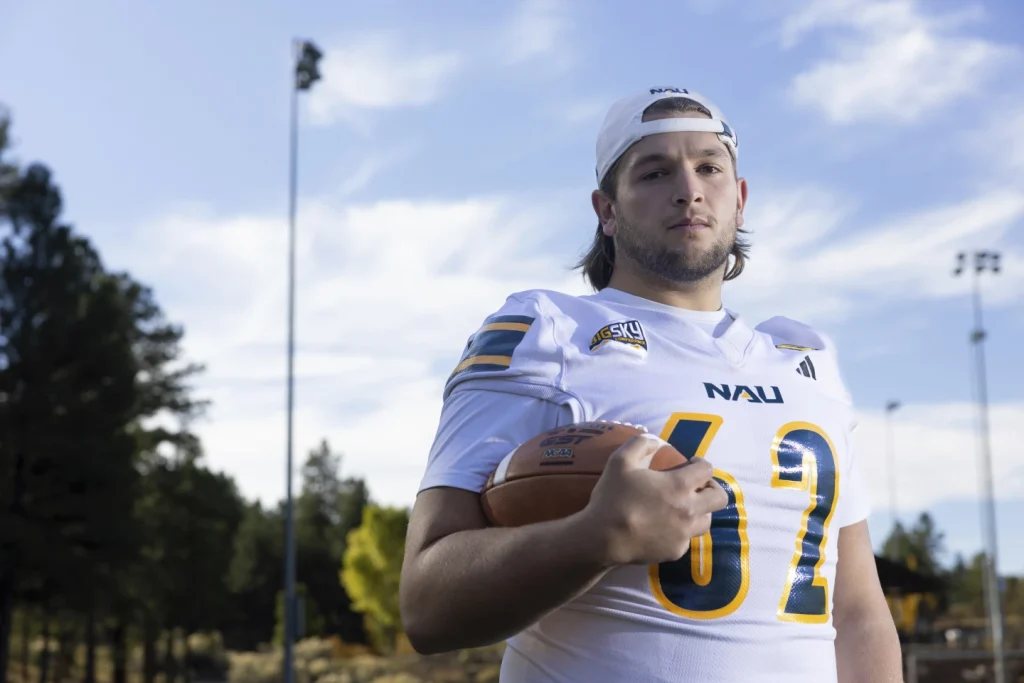
Take Northern Arizona University offensive lineman Jonny Bottorff, for instance. When Bottorff transferred to the Division I program from Missouri Western State University, a Division II school, his focus was on football and academics, not NIL deals. Though he has earned a few hundred dollars through sponsorships, it hasn’t been life-changing.
“I think the reality for most college athletes is things haven’t really changed that much. We just got an extra little bit of cash in our pockets that probably needed to happen,” Bottorff shared. For him, the real prize lies in his academic achievements: an undergraduate degree and now the pursuit of a master’s degree.
The Dual Path of Athletics and Academics
The narrative of NIL deals transforming the lives of student-athletes is often reserved for high-profile individuals competing at the pinnacle of collegiate sports. Athletes like NFL quarterback Jayden Daniels and WNBA player Angel Reese have capitalized on their personal brands, signing endorsement deals with major companies such as Powerade and Reebok. But for most athletes, NIL opportunities provide supplemental income rather than an escape from financial concerns.
Education remains a cornerstone of the collegiate experience for athletes. NCAA data from last year reported a record 91% graduation rate for Division I student-athletes, a figure that surpasses many non-athlete cohorts. Before NIL agreements became permissible, athletes competed under a straightforward agreement: their athletic performance in exchange for an education. Today, while NIL deals have diversified opportunities, the degree remains the centerpiece for many.
Indiana University basketball player Anthony Leal exemplifies this balance. Having already earned his undergraduate degree, Leal decided to return as a fifth-year senior to pursue a master’s in business administration. “I’m about 70% through the program in the Kelley School of Business,” Leal explained. “I wanted to get that degree.”
For athletes like Leal, NIL money can be a welcome incentive, but it doesn’t overshadow the intrinsic value of a college education. “Every student knows that it has to be a piece of the puzzle at some level,” he noted. “But, yeah, sure, some people may have other goals.”
The Allure and Complexity of the Transfer Portal
The transfer portal has added another layer of complexity to college athletics. Designed to give athletes greater mobility, it allows them to switch schools and compete immediately, a significant shift from previous rules requiring a one-year waiting period. For some, the portal offers the chance to shop around for better NIL opportunities. Yet, for others, it’s about finding the right academic and athletic fit.
UNLV quarterback Matthew Sluka recently highlighted the challenges NIL deals can bring. He left the team amid a dispute over an unpaid $100,000 NIL agreement, illustrating the financial risks tied to these arrangements. However, stories like Sluka’s are exceptions rather than the rule. Most athletes navigating the transfer portal prioritize factors such as academics, team culture, and personal growth.
Ray Harrison, a senior guard on Grand Canyon University’s basketball team, transferred from Presbyterian College in 2022. For Harrison, the move was about finding a better overall fit. “I just came out here because this is where God led my heart,” he shared. While he’s since won two conference championships, the transition wasn’t seamless. “When I got here, I had to do some catching up,” he said, referring to course credits that didn’t transfer.
Similarly, basketball player Trinity San Antonio faced academic hurdles when transferring from California Baptist University to Grand Canyon. “Coming in as a freshman when you’re really a junior is not ideal,” San Antonio said, highlighting the struggles of transferring credits. For athletes like her, academic continuity remains a critical factor when navigating the transfer process.
Dreams Beyond the Game
For younger athletes aspiring to compete at the collegiate level, education remains a powerful motivator. High school wide receiver Tavarius Covington dreams of playing college football but is driven by a larger goal: earning a degree in business and becoming the first in his family to graduate from college.
“I want to establish a foundation,” Covington explained. “Part of it is trying to inspire my younger brother, to show him that there’s more to look forward to coming out of high school.” NIL money may be a future consideration for athletes like Covington, but for now, his focus is on opening doors through education.
A Balancing Act
While NIL opportunities have introduced a new dimension to college sports, they have not diminished the importance of education for most athletes. For some, sponsorships provide an extra boost to their finances, but the pursuit of a degree continues to be the ultimate goal. The stories of athletes like Bottorff, Leal, Harrison, and San Antonio reflect the broader reality: beyond the fame and financial incentives, college athletics remain a pathway to personal and professional growth.
In a world where the financial stakes of college sports continue to rise, the true value for many athletes lies in the foundation they build for life after the game. Through education, perseverance, and the support of their teams and institutions, these athletes are shaping futures that extend far beyond the playing field.