

The Michigan-Ohio State Scuffle: Why Postgame Chaos Hurts College Sports

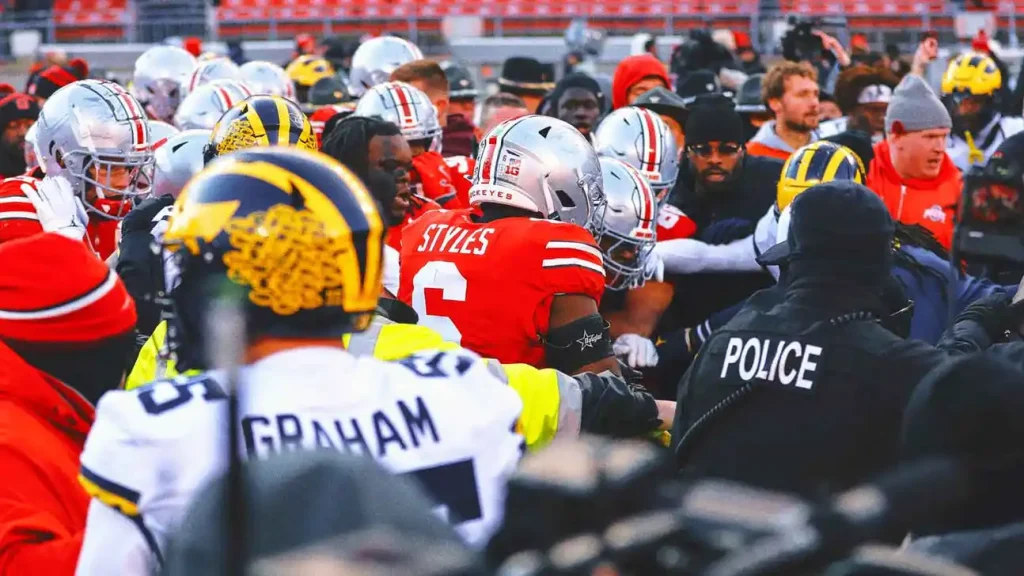
The 120th edition of “The Game” between Michigan and Ohio State lived up to its reputation for drama, intensity, and bitter rivalry. Michigan sealed a stunning 13-10 victory over the No. 2 Buckeyes with a late field goal, delivering their fourth consecutive win against their nemesis and likely ending Ohio State’s Big Ten title aspirations. But while the game itself was a showcase of grit and determination, the postgame scene spiraled into chaos—an all-too-familiar reminder of how sportsmanship can be overshadowed by unchecked emotions.
What Happened After the Final Whistle?
As Michigan celebrated its victory, emotions boiled over on both sides. Wolverines head coach Sherrone Moore waved goodbye to Ohio State fans as time expired, a move that fueled tension in the stands and on the field. Adding to the drama, Michigan players attempted to plant their school’s flag on the Buckeyes’ iconic midfield logo—a symbolic gesture of dominance that did not sit well with Ohio State players or fans.
Complicating matters, the attempted flag-planting coincided with “Carmen Ohio,” Ohio State’s traditional alma mater song, a sacred postgame ritual for the Buckeyes. This convergence of jubilation and perceived disrespect sparked a full-blown melee, with players from both teams exchanging shoves, words, and more. The scene quickly descended into chaos, staining what should have been a celebration of competitive excellence.
Why This Scene Is Bad for College Sports
Postgame fights like this one are more than isolated moments of poor judgment—they represent a broader problem that damages the integrity and image of college sports. Here’s why this incident is particularly concerning:
1. Erosion of Sportsmanship
College sports are meant to embody the highest ideals of athletic competition: teamwork, resilience, and respect for opponents. While rivalries add intensity and passion, they should not override basic sportsmanship. The Michigan players’ attempt to plant their flag on Ohio State’s midfield logo was a clear provocation, disrespecting both the Buckeyes and their traditions. Ohio State’s retaliatory actions, while understandable given the context, escalated the situation further, turning the field into a battleground.
This behavior sends a troubling message to younger athletes watching at home, suggesting that disrespect and physical altercations are acceptable responses to competition. It undermines the role of college athletes as role models and tarnishes the reputations of both programs.
2. Damage to the Rivalry’s Prestige
The Michigan-Ohio State rivalry is one of the most storied in college sports, steeped in tradition and history. Fans tune in every year to witness two elite programs battle for supremacy, often with championship implications. Postgame brawls detract from the significance of the rivalry, reducing it to a spectacle of hostility rather than a celebration of athletic excellence. This incident risks overshadowing the high level of play on display during the game itself.
3. Impact on Players’ Futures
College athletes are not just students—they are also ambassadors for their schools and potential professionals in their respective sports. Incidents like this can have lasting consequences for their reputations. Scouts, employers, and fans take note of behavior on and off the field, and a player caught in a postgame fight risks being labeled as immature or undisciplined. For many of these athletes, their college careers are stepping stones to broader opportunities, and such incidents can create unnecessary roadblocks.
4. A Bad Look for the Institutions
Colleges and universities pride themselves on fostering environments of respect and learning. When their athletes engage in public altercations, it reflects poorly on the institution as a whole. Alumni, donors, and prospective students may view such behavior as indicative of a broader cultural issue, potentially damaging the school’s reputation and its ability to attract talent and support.
5. Setting a Dangerous Precedent
Allowing incidents like this to pass without significant repercussions sets a dangerous precedent. If players and coaches see that postgame altercations result in little more than a slap on the wrist, it increases the likelihood of future incidents. Strong leadership from coaches, athletic departments, and the NCAA is needed to establish clear boundaries and ensure accountability.
A Path Forward: Restoring Respect in Rivalries
To prevent similar incidents in the future, both Michigan and Ohio State must take proactive steps to emphasize sportsmanship and respect. This could include:
- Improved Postgame Protocols: Establishing clear guidelines for postgame celebrations, such as prohibiting on-field provocations like flag-planting.
- Leadership from Coaches: Coaches play a critical role in shaping their teams’ behavior. Both programs should ensure that their players understand the importance of respect, even in the heat of rivalry games.
- Accountability Measures: The NCAA or respective conferences should enforce stricter penalties for postgame altercations, including suspensions or fines for individuals or teams involved.
- Education and Awareness: Incorporate sportsmanship training into athletic programs to reinforce the values of respect and integrity.
A Reminder of What’s at Stake
The postgame scuffle between Michigan and Ohio State is a cautionary tale for college sports. Rivalries like “The Game” are meant to inspire, bringing out the best in athletes and captivating fans. But when emotions boil over into physical altercations, the focus shifts away from the incredible talent and effort on display.
By taking steps to prioritize sportsmanship and accountability, college sports can ensure that rivalries remain intense but respectful. The Michigan-Ohio State matchup will always be one of the most exciting events in college athletics—but it’s time to ensure that the headlines reflect the game, not the chaos that followed.