

Understanding the DISC Profile: A Comprehensive Guide to Behavioral Insights

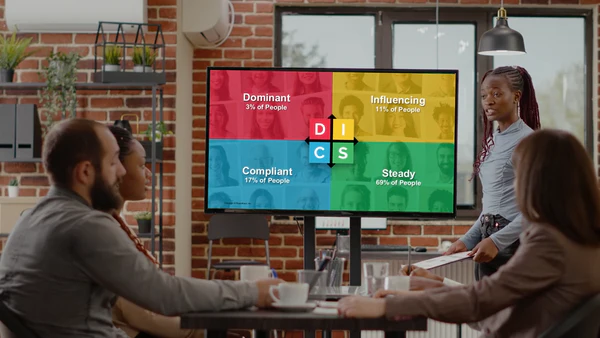
The DISC profile is a widely recognized and utilized tool for understanding human behavior and communication styles. Developed from the research of psychologist William Moulton Marston in the late 1920s, DISC provides a framework to identify and analyze patterns in how individuals interact, make decisions, and respond to their environment. This tool is particularly popular in workplaces, team-building exercises, and leadership development programs due to its ability to foster better communication, collaboration, and self-awareness.
At its core, the DISC profile categorizes behavior into four primary dimensions: Dominance, Influence, Steadiness, and Conscientiousness. These categories represent different aspects of an individual’s personality and behavioral tendencies, offering a language to describe how people prefer to operate. While no one is exclusively tied to a single dimension, the profile provides insights into which traits are most dominant in an individual, helping them understand their natural preferences and tendencies.
The Four DISC Dimensions
Dominance (D) reflects a person’s approach to challenges and problem-solving. People who score high in Dominance are often assertive, results-oriented, and unafraid to take risks. They thrive on competition, seek efficiency, and value action over deliberation. On the flip side, they may sometimes come across as overly direct or impatient when working with others who require a more measured pace.
Influence (I) relates to how individuals interact with others and express their emotions. High scorers in Influence are typically enthusiastic, outgoing, and persuasive. They are natural networkers, skilled at building relationships and motivating teams. Their optimism and energy can drive collaboration, but they may occasionally prioritize social harmony over critical analysis or detail-oriented tasks.
Steadiness (S) focuses on an individual’s preference for stability, consistency, and teamwork. People with a strong Steadiness profile are dependable, empathetic, and excellent listeners. They value loyalty and cooperation, making them the glue that holds teams together. However, their aversion to conflict and change may sometimes hinder adaptability in dynamic situations.
Conscientiousness (C) emphasizes attention to detail, accuracy, and adherence to rules. High scorers in this dimension are logical, methodical, and precise. They excel at analyzing data, developing processes, and ensuring quality control. Their preference for structure can sometimes make them risk-averse or overly focused on perfection, potentially delaying decisions in fast-paced environments.
How the DISC Profile Is Assessed
The DISC profile is typically assessed through a self-administered questionnaire that evaluates an individual’s preferences and tendencies in various scenarios. Participants respond to a series of statements, choosing the options that best describe their behavior or approach. The results are then plotted on a graph or chart that highlights the individual’s dominant traits across the four dimensions.
What makes DISC unique is its emphasis on behavior rather than personality. It does not attempt to define a person’s intrinsic character or predict their potential; rather, it focuses on observable actions and tendencies, providing actionable insights that can be applied in different contexts.
Applications of the DISC Profile
The versatility of the DISC profile makes it an invaluable tool in numerous settings. In professional environments, it helps managers and teams understand their dynamics, improve communication, and assign roles based on behavioral strengths. For instance, a person high in Dominance might excel in a leadership role, while someone with strong Conscientiousness might thrive in quality assurance or analytical tasks.
Beyond the workplace, the DISC profile is also used in personal development, coaching, and relationship counseling. By understanding their own profile, individuals can gain clarity on how they react under stress, what motivates them, and how they can better connect with others. Similarly, understanding the profiles of others can foster empathy and reduce conflict by allowing people to adapt their communication styles.
DISC in Action: Enhancing Team Collaboration
One of the most impactful applications of DISC is in team collaboration. Consider a scenario where a team includes a mix of high-Dominance and high-Steadiness individuals. The former might push for rapid decision-making and aggressive targets, while the latter may advocate for a measured, consensus-driven approach. Without awareness of these differences, tensions could arise. However, by using the DISC profile, team members can recognize these tendencies as complementary rather than conflicting, leveraging the strengths of both approaches to achieve better outcomes.
Similarly, in client-facing roles, understanding a customer’s DISC profile can enhance interactions and improve satisfaction. For example, a high-Influence client may respond well to enthusiasm and relationship-building, while a high-Conscientiousness client might prioritize detailed, fact-based presentations. Tailoring communication to match these preferences can lead to more effective and productive relationships.
Why DISC Matters Today
In today’s diverse and fast-paced world, understanding behavioral differences has never been more important. The DISC profile offers a structured yet flexible framework to navigate these complexities, providing individuals and organizations with the tools to foster better relationships, drive performance, and create inclusive environments.
What sets DISC apart from other behavioral models is its simplicity and accessibility. Its four-dimensional approach is easy to grasp, making it an ideal starting point for anyone seeking to improve self-awareness or team dynamics. Yet, despite its simplicity, it delivers profound insights that can lead to meaningful change, whether in a professional or personal context.
By embracing DISC, individuals can transform the way they communicate, work, and lead, creating opportunities for growth and collaboration. Whether you’re a seasoned professional or just beginning your career, understanding the DISC profile can unlock new possibilities and provide a roadmap for navigating the complexities of human interaction with confidence and skill.