

Understanding the Diverse Demographic of Student-Athletes in the United States

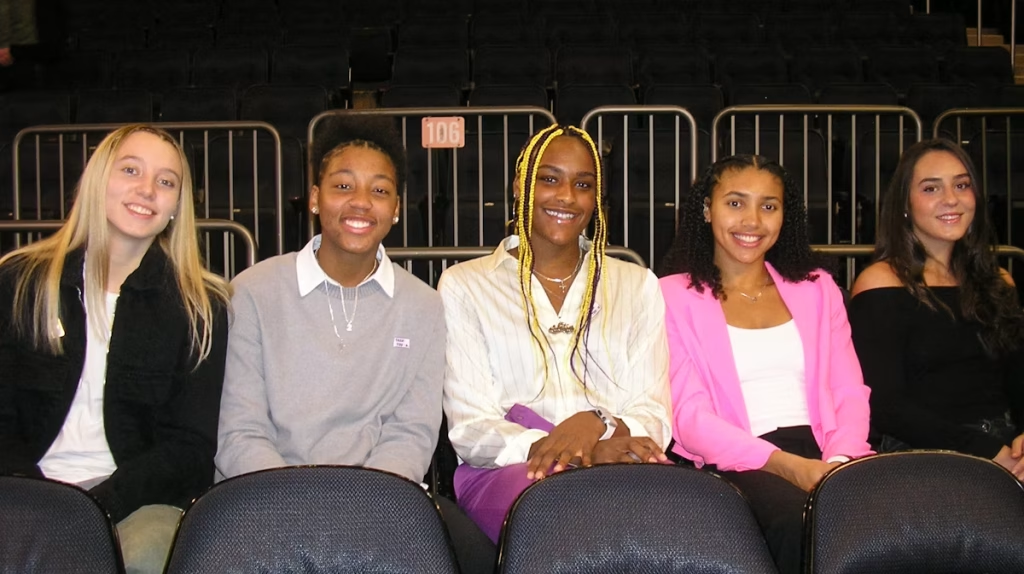
The demographic of student-athletes in the United States is a microcosm of the nation’s diversity, encompassing various backgrounds, academic disciplines, and sports. This diversity is essential to consider when developing services to support the vast majority of student-athletes. By understanding the demographic makeup, stakeholders can tailor programs and resources to meet the unique needs of these athletes effectively.
Gender Diversity and Title IX
The gender distribution among student-athletes in the NCAA reflects the ongoing efforts to promote gender equality in college sports. Approximately 44% of student-athletes are women and 56% are men. This distribution highlights the impact of Title IX initiatives, which have been instrumental in increasing opportunities for female athletes. Title IX, enacted in 1972, mandates gender equity in educational programs and activities, including sports, leading to significant progress in women’s sports over the past few decades.
Despite these advancements, there remains a need for continuous efforts to ensure that female student-athletes receive equal resources, opportunities, and recognition. Providing tailored support services that address the specific challenges faced by female athletes, such as balancing athletic and academic commitments and preparing for careers in sports or other fields, is crucial.
Racial and Ethnic Composition
The racial and ethnic composition of student-athletes varies significantly across different sports and divisions. For instance, NCAA Division I sports tend to have a higher percentage of African American athletes, particularly in basketball and football. Recent data indicate that about 62% of student-athletes are White, 18% are African American, 12% are Hispanic, and 4% are Asian.
In contrast, sports like baseball and swimming have a higher percentage of White athletes. This disparity underscores the importance of promoting diversity and inclusion across all sports. Initiatives aimed at increasing access to underrepresented groups in various sports can help create a more equitable environment. Additionally, providing cultural competency training for coaches and staff can enhance the support for athletes from diverse backgrounds.
Academic Pursuits and Trends
Student-athletes pursue a wide range of academic majors, with trends suggesting a preference for fields that may accommodate their athletic schedules, such as business, social sciences, and kinesiology. However, there is a growing emphasis on supporting athletes in STEM (Science, Technology, Engineering, and Mathematics) and other demanding fields. Encouraging student-athletes to explore diverse academic interests and providing academic support tailored to their unique schedules can help them succeed both on and off the field.
Universities should offer flexible academic programs and resources such as tutoring, academic advising, and time management workshops specifically designed for student-athletes. By doing so, they can help athletes balance their academic and athletic commitments more effectively and prepare for successful careers after graduation.
Socioeconomic Backgrounds
Student-athletes come from diverse socioeconomic backgrounds, with scholarships and financial aid playing a critical role in enabling access to higher education for those from lower-income families. However, there are disparities in financial support, with athletes in revenue-generating sports (e.g., football and basketball) often receiving more substantial support compared to those in non-revenue sports.
To address these disparities, universities and athletic programs should strive to provide equitable financial support to all student-athletes, regardless of their sport. This includes offering scholarships, stipends, and other forms of financial assistance to help cover tuition, housing, and other expenses. Additionally, providing financial literacy education can help student-athletes manage their finances effectively and prepare for life after college.
Geographic Representation
Student-athletes hail from all over the United States and internationally, with large sports programs often recruiting nationally and globally. This recruitment strategy creates a diverse geographical representation within college sports teams. Certain states, like California, Texas, and Florida, are known for producing a high number of collegiate athletes due to strong high school sports programs.
Understanding the geographic diversity of student-athletes can help universities and athletic programs provide tailored support services that address the unique needs of athletes from different regions. For example, programs that offer support for transitioning to a new cultural or academic environment can help international and out-of-state athletes adjust more effectively.
The demographic of student-athletes in the United States is diverse, encompassing various gender, racial, ethnic, academic, socioeconomic, and geographic backgrounds. Understanding this diversity is crucial for developing services and programs that support the unique needs of these athletes. By promoting gender equality, increasing access to underrepresented groups, supporting diverse academic pursuits, addressing socioeconomic disparities, and recognizing geographic diversity, stakeholders can create a more inclusive and supportive environment for all student-athletes.
Tailoring services to meet the needs of this diverse population will not only enhance the college sports experience but also prepare student-athletes for successful careers and fulfilling lives after graduation. Through continued efforts to understand and support the diverse demographic of student-athletes, we can ensure that the benefits of college sports are accessible to all.