

The Behavioral Interview: How to Answer Tough Questions with STAR

Behavioral interviews have become a staple of modern recruiting processes. Employers use them to assess how candidates handle real-life situations, seeking evidence of the skills and competencies they value most. If you’re preparing for a behavioral interview, understanding how to navigate the often challenging questions is critical to making a great impression. The STAR method is one of the most effective frameworks for answering these tough behavioral questions.
What is a Behavioral Interview?
In a behavioral interview, candidates are asked to describe past situations where they had to demonstrate certain competencies, such as leadership, problem-solving, teamwork, or adaptability. Employers believe that past behavior is the best predictor of future performance, so instead of hypothetical questions, interviewers focus on actual experiences.
Common behavioral interview questions might start with phrases like:
- “Tell me about a time when…”
- “Can you describe a situation where you…”
- “Give an example of when you…”
These questions are designed to dig deeper into how you think, respond, and act under pressure, making them challenging for many candidates to navigate.
Introducing the STAR Method
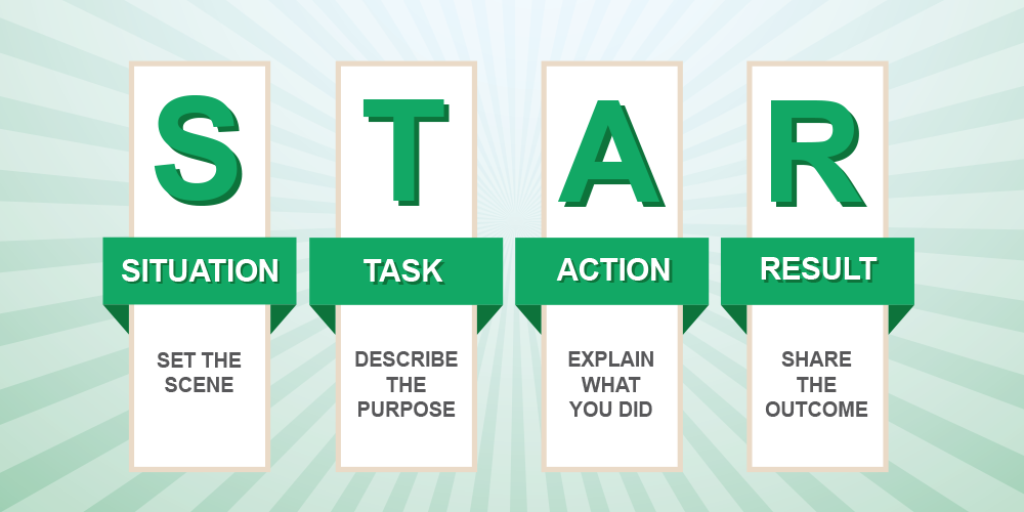
The STAR method offers a structured way to respond to behavioral interview questions. STAR stands for Situation, Task, Action, and Result. By breaking down your answers into these four components, you can provide clear, concise, and compelling responses that highlight your strengths and experience. Let’s look at each part of the STAR framework in more detail:
- Situation: Describe the context in which the event or challenge occurred. This sets the scene and gives the interviewer background information about the scenario you’re discussing. Focus on providing enough detail without overwhelming the interviewer. Be sure to keep it relevant to the question.
- Task: Explain the specific responsibility or challenge you faced. What was your role in the situation? Were you assigned a task? Did you need to make a critical decision? This step helps to clarify the role you played and the goals you were working toward.
- Action: Here, you focus on what steps you took to resolve the situation. This is arguably the most important part of your response because it highlights the skills, strategies, and thinking process you employed. Be specific about your actions and avoid generalizations—it’s crucial to own the narrative by detailing how you handled the situation.
- Result: Conclude your response by sharing the outcome of your actions. What were the tangible results? Did you meet or exceed expectations? Where possible, use quantifiable data, such as percentages, timelines, or other metrics, to demonstrate the impact of your efforts.
Applying STAR in Action
To illustrate how to use the STAR method effectively, let’s explore a common behavioral interview question and break it down using the framework:
Example Question: “Tell me about a time when you faced a major challenge at work and how you handled it.”
Situation: “At my previous job, I was part of a team responsible for launching a new product. Two weeks before the scheduled release date, we discovered that one of our key suppliers was unable to deliver a critical component, putting the entire launch at risk.”
Task: “As the project manager, my primary task was to quickly identify an alternative solution that would allow us to stay on track with the launch timeline without compromising the quality of the product.”
Action: “I immediately organized a meeting with the internal team to discuss potential alternatives. After brainstorming, I reached out to three new suppliers, negotiated expedited terms, and personally coordinated with our quality assurance team to ensure that the new component met our standards. At the same time, I worked with the marketing team to adjust our launch strategy in case we needed to push the release.”
Result: “By securing a new supplier within 48 hours, we were able to maintain our production schedule and launch the product on time. The product was well received, resulting in a 20% increase in sales during the first quarter post-launch.”
Why STAR Works
The STAR method is effective because it ensures your responses are focused and comprehensive. It helps you avoid vague or rambling answers that don’t give the interviewer the information they need. By sticking to the STAR structure, you stay on topic, provide relevant details, and demonstrate how your actions led to successful outcomes.
Employers appreciate candidates who can communicate their experiences clearly and relate them to the role they are applying for. STAR not only organizes your thoughts but also allows you to highlight key skills such as decision-making, problem-solving, leadership, and communication.
Preparation is Key
While the STAR method is a great framework, the key to mastering behavioral interviews is preparation. Start by reviewing the job description and identifying the skills and competencies the employer is looking for. Then, think about past experiences that align with those skills. Practice answering common behavioral interview questions using the STAR method, and rehearse until your answers feel natural but not rehearsed.
When preparing, consider the variety of challenges you’ve encountered in different professional settings. Whether you’re discussing leadership, conflict resolution, or meeting deadlines under pressure, it’s important to choose examples that showcase your strongest skills. Keep in mind that interviewers are not just looking for what you did—they’re also assessing how you think and approach complex situations.
Stay Authentic
While it’s tempting to craft the perfect answer, authenticity is crucial in a behavioral interview. Employers can often tell when a story feels too rehearsed or embellished. Focus on sharing genuine experiences where you made an impact. If the outcome wasn’t perfect, that’s okay—employers value honesty and appreciate candidates who reflect on their experiences with humility and a learning mindset.
Ultimately, the STAR method allows you to present yourself as a capable, thoughtful professional who can handle challenges and deliver results. With preparation and practice, you’ll be well-equipped to navigate even the toughest behavioral interview questions with confidence.